


What More Than Two Million Rides Reveal About School Transit
More than two million student trips. Nearly 28million miles. Here's what that data reveals about the future of alternative student transportation.

iStock image

- Analysis of over two million student trips unveils insights into the efficiency and patterns of school transit systems.
- The extensive data covers nearly 28 million miles, highlighting the scale and reach of alternative transportation options for students.
- Findings from this comprehensive dataset could inform future decisions and improvements in student transportation strategies.
*Summarized by AI
Every school day, thousands of students who can't ride a traditional yellow bus still need a reliable way to get to class. For students with disabilities, those experiencing housing instability, and others with complex needs, transportation is often the deciding factor in whether they show up at all.
Data from EverDriven's most recent Safety and Operations Report, covering 2.6 million trips, 27.7 million miles, and nearly 31,000 students across 37 states, offers a rare ground-level view of what Alternative Student Transportation actually looks like at scale. The findings say less about any one provider than about where the industry is heading and what districts will need to keep up with.
Key Findings from the Data
Across districts, vehicle types, and student populations, five patterns emerged that point to where alternative student transportation is heading, and what districts will need to navigate it well.
1. The Population Driving Demand Has Fundamentally Changed
The growth in alternative transportation is a result of a demographic shift. Sixty-two percent of school districts report an increase in their special education populations. Nearly half report growth in the number of students qualifying under the McKinney-Vento Act. Traditional fixed-route models weren't designed for students whose addresses change mid-semester or whose placements shift without warning.
As districts serve more students with disabilities, students in foster care, medically fragile students, and those experiencing housing instability, the definition of safe student transportation has had to expand with them. A route that works in September may not work in November. That reality is reshaping how districts think about transportation planning from the ground up.
2. Consistency Matters More Than Most Districts Realize
Among students with disabilities in the reporting data, more than 83% of trips were completed by the same driver. More than 41% of those trips included specialized safety equipment or monitors. These details reflect something transportation research has long supported: for students navigating complex circumstances, a predictable ride can be as stabilizing as anything that happens inside the classroom.
Districts that treat driver consistency as a logistical afterthought often underestimate its impact on student anxiety, attendance, and family trust. For students with the most specialized needs, familiarity with a driver is a part of the service.
3. Flexibility and Reliability Are No Longer Trade-Offs
There's a longstanding assumption in student transportation that flexibility comes at the cost of reliability, that adapting quickly means accepting more disruption. The operational data challenges that assumption.
Across more than two million trips, 100% were tracked in real time. More than 90% arrived within five minutes of the scheduled drop-off time. Districts that can onboard new students in as little as one day and adjust routing in real time are demonstrating that responsiveness and consistency can coexist, but only when the underlying system is built for it.
4. Safety at Scale Requires More Than Compliance
State regulations for small-capacity vehicles vary widely and are often less prescriptive than those governing yellow school buses. That regulatory gap puts more responsibility on districts and their partners to fill it.
The reporting data provides one benchmark: 100% of drivers completed pre-service drug testing and multi-layered background checks, including checks against the National Sex Offender Registry. Every vehicle passed annual third-party safety inspections. Across more than two million trips, 99.99% were completed without accident, major or minor.
For districts evaluating alternative transportation providers, those figures offer a useful frame for what rigorous safety standards can produce, and a baseline for the questions worth asking.
5. Technology Is Becoming the Connective Tissue of Transportation Operations
Technology now plays a significant or critical role in transportation strategy for 68% of districts. Real-time GPS, centralized scheduling, parent-facing apps, and AI-powered driver monitoring are moving from pilot programs to operational expectations. One in two vehicles is equipped with AI-powered cameras, with 32% more districts opting into this service over the last year.
The shift matters because it changes what visibility means for families. Rather than calling a transportation office when a ride is late, caregivers can see live ETAs, driver details, and trip status in real time. That kind of transparency doesn't just reduce administrative workload; it changes the nature of the relationship between districts and the families they serve.
What the Data Points To
More than two million trips is a large enough sample to draw some conclusions. Alternative transportation demand is growing and increasingly concentrated among students with the fewest backup options. Consistency, safety, and flexibility aren't competing priorities; they're interconnected. And the districts navigating this well aren't just solving a logistics problem. They're making a commitment to equitable access, one ride at a time.
This article reflects the views of EverDriven and does not necessarily represent the views of School Bus F or Bobit Business Media.
Quick Answers
Analyzing over two million student trips provides valuable insights into travel patterns, efficiency, and areas for improvement in school transportation systems.
*Summarized by AI
More Management
EverDriven Debuts TripCentral as New District Transportation Portal
The new transportation management hub takes over the district portal to power trip planning, operations, visibility, and intelligence for school district transportation needs.
Read More →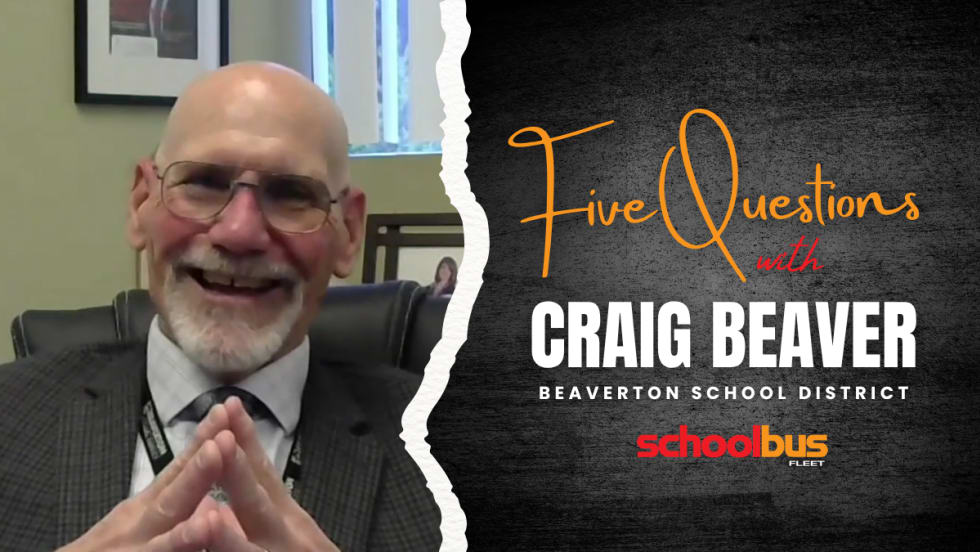
Lessons Learned from 4 Decades in Transportation: 5 Questions with Craig Beaver
Sit down with longtime transportation leader Craig Beaver moments before he retires, as he reflects on his career leading up to his role at Beaverton School District in Oregon and the secrets to leading great teams.
Read More →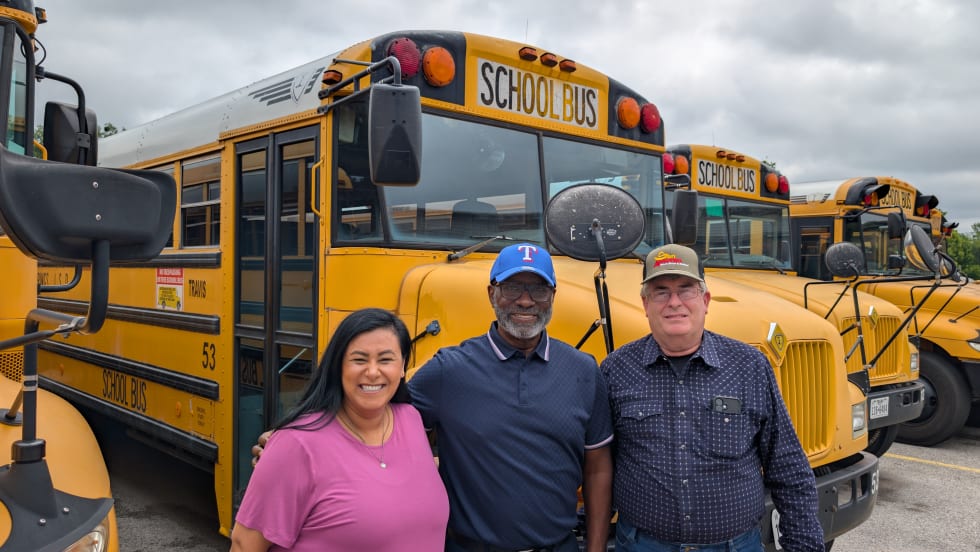
BusRight Honors Texas Driver With Inaugural Behind The Wheel Award
Selected from more than 300 nominations, Lawson Crook earned BusRight’s inaugural award for his dedication to students and safety.
Read More →


Craig Beaver’s Final Stop: Lessons from 43 Years in Transportation
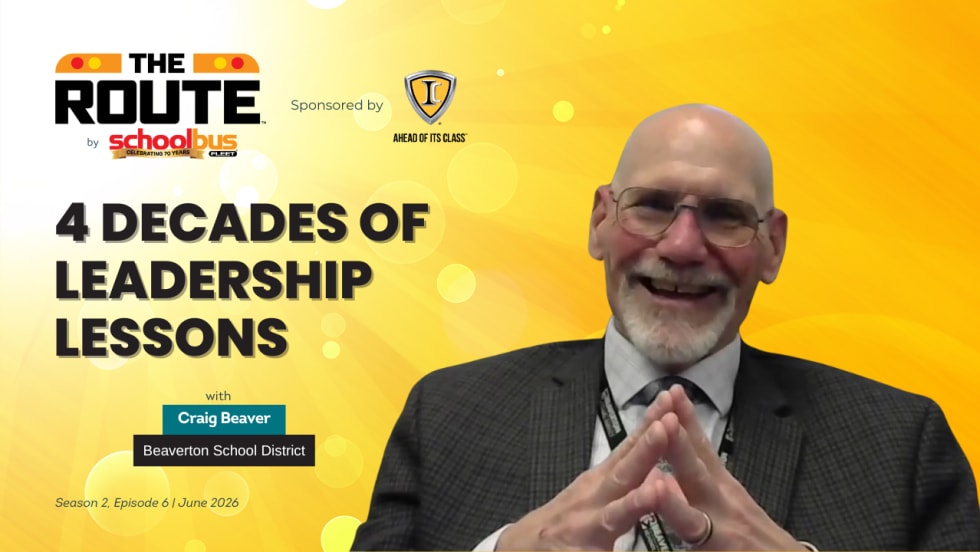
After more than four decades in transportation, retiring Beaverton School District director Craig Beaver reflects on leadership, alternative fuels, AI, staffing, and what’s coming next. The Route is sponsored by IC Bus.
Read More →
What 43 Years in Transportation Taught Craig Beaver About Leadership
After more than four decades in transportation, retiring Beaverton School District admin Craig Beaver reflects on leadership, alternative fuels, AI, staffing, and what’s coming next.
Read More →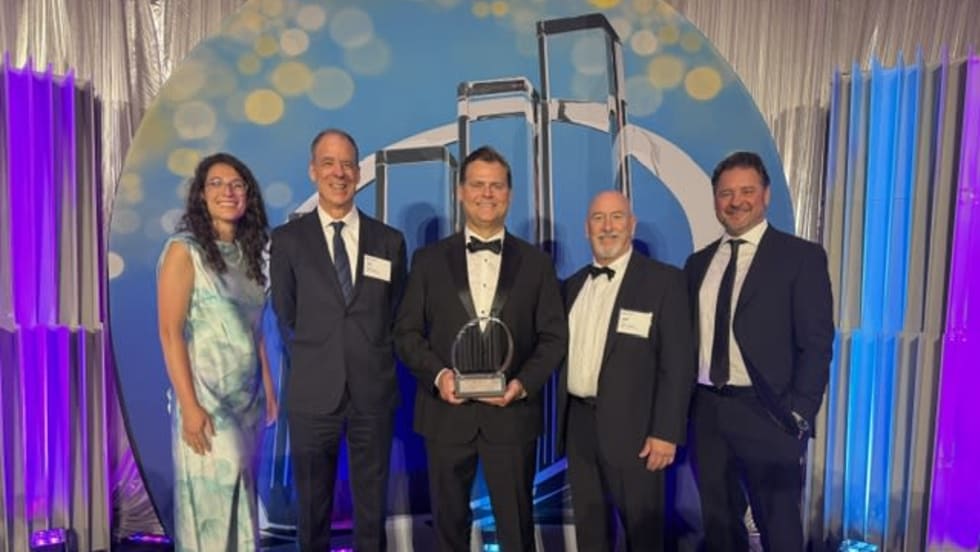
ASTP's Tod Eskra Named an Entrepreneur of the Year
The award from Ernst & Young honors visionary leadership behind one of America's fastest-growing student transportation contracting companies.
Read More →
Drivers and Technicians: Help Benchmark Today's School Bus Manufacturers
If you've spent time behind the wheel or under the hood, we want to hear your perspective on the buses you know best.
Read More →
13 Industry Leaders Describe School Transportation in One Word
What word best describes the school bus industry today? We posed that question to over a dozen manufacturers, resulting in a revealing mix of perspectives on the challenges and opportunities ahead.
Read More →
Tyler Technologies Adds New AI, Transactions Leadership Roles
Two company executives are promoted to newly created C-suite positions to accelerate the company's long-term growth in both artificial intelligence and payments.
Read More →
Pro-Vision Acquires Convoy Technologies
The deal aims to broaden customer relationships and adds specialized vehicle video capabilities for commercial fleets.
Read More →