




From Overwhelmed to Optimized: How ChatGPT Is Transforming School Transportation
Lessons Learned from 4 Decades in Transportation: 5 Questions with Craig Beaver
Sit down with longtime transportation leader Craig Beaver moments before he retires, as he reflects on his career leading up to his role at Beaverton School District in Oregon and the secrets to leading great teams.
June 17, 2026
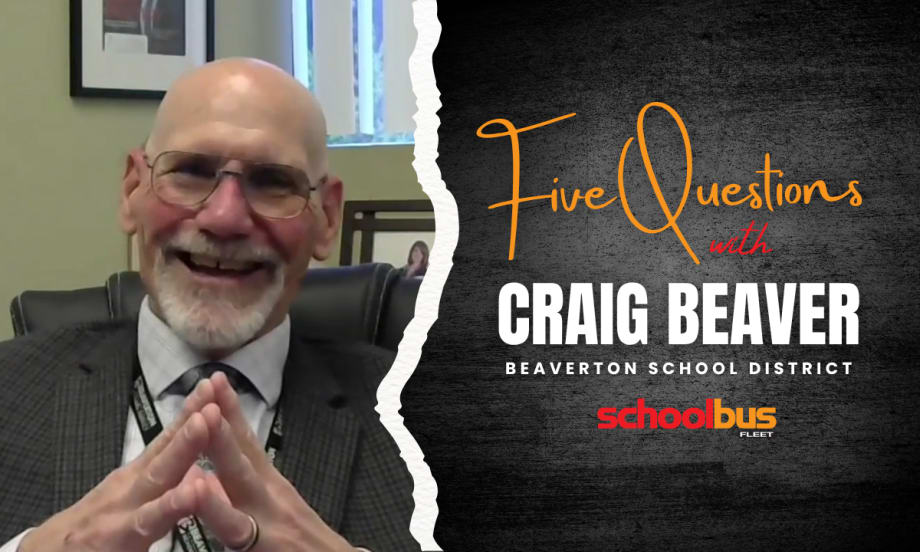
"We're all in this together. A rising tide really does lift all boats," Craig Beaver said of the student transportation community.
Credit:
School Bus Fleet
10 min to read
On June 30, 2026, Craig Beaver will hang up his hat as he transitions into a new phase: retirement.
Beaver has been leading the transportation team at Oregon’s Beaverton School District for over a decade. He’s an industry award winner known for his early adoption and application of alternative fuels. Yet, his career actually started in trucking!
So, over 40 years later, what has he learned about transportation and the keys to leading strong teams? We asked him for you.
Q: Tell us about your career leading up to your current role in Beaverton and how your early experiences shaped who you are today.
Craig Beaver: I've been at Beaverton School District for 11 years. Before that, I was in San Diego, and I spent 15 years as a director at a high school district there. Prior to that, I spent 17 years working for a trucking company as a manager, an engineer, and a supervisor.
I worked for Roadway Express, a company no longer in business. They taught me so many things about how to manage people, how to execute efficiently and cost-effectively, and how to work with diverse work groups. They were unionized, so it taught me how to deal with people and deploy resources.
As a terminal manager, I was responsible for the entire operation, the profit and the loss. When I came into the school bus business — certainly not a profitable operation — I worked very hard to apply the same principles. And we were successful; we were able to improve efficiencies and really focus on costs, and being a good steward of public money.
I learned a very strong work ethic, being safety first, and making sure every detail was taken care of, trying to think in advance.
It's certainly a different workforce with school bus drivers versus truck drivers and dock workers. It took a little bit of adjustment. We were fortunate; we had a very large field trip program, and we were able to do a lot of outside business and bring revenue in from the outside, both doing services for other districts and working on fire trucks and emergency vehicles, so I was able to bring all of those experiences up here to Beaverton.
I was fortunate to learn the nuts and bolts of special ed transportation, which I really didn't know. The regular ed side wasn't too difficult or different from what we did in the trucking business. Special ed, however, was certainly a lot different.
California's got a robust special ed program; we saw the introduction of McKinney-Vento. Economically, a lot of fun things happened during that time, and I was able to bring that to Beaverton, which was just so refreshing.
Beaverton was so far advanced from anything I had seen. Really had some fine people that preceded me, and good policies in place. I like to think that we just built on that and streamlined things.
The thing I learned in the trucking business was you never have enough people. And even if you think you have enough, you still don't. I applied that in San Diego, and we've just put it on steroids here at Beaverton. We don't really have a hiring problem anymore.
Q: Now that you’re fully staffed, what are your secrets to hiring right and tackling that driver shortage?
First and foremost, it's got to be the culture. The folks in charge really have to want to make the right environment. We work very hard to treat people respectfully. You know, life happens. Things come up, and we need to be flexible enough to adjust to those things. That starts with staffing.
Most of the time, every supervisor or manager I've met wants to accommodate their folks, but they can't because they're restricted by staff or equipment. To have staffing so you're able to accommodate things that pop up, that's really been key.
We work really hard to promote a familiar, familial atmosphere, whether it be raffles and giveaways, potlucks, recognizing people, and going out of our way.
One of the most important things I think that I ever did was to get my commercial license when I went to work in San Diego. I went through the training program to see what it looked like for the new employees that we were hiring. When I came to Oregon, all I had to do was convert my license. I went through the program here at Beaverton again so I could see what we were teaching our people.
Sometimes it is simple as adding more trash cans to the yard so that people don't have to walk as far, or putting a porta potty into a parking lot where it’s a long walk to get to the restrooms. Drivers see that, and they appreciate that.
I'm not “too good” to drive; they love seeing the director out there, and it gives me an opportunity to see people in their environment. You get to hear a lot of things you don't hear sitting behind the desk.
Q: Throughout your career, what changes stand out to you as the industry has evolved?
Number one, obviously, is technology. I remember when I first started, diesel particulate filters were just coming in. So we've gone through that whole process from DPFs to diesel emission fluid to propane to electric buses.
I remember when we first got GPS, then we could see it on a screen in real time, and then internal cameras, and then routing software. I remember when we used Google Maps, and now we're into AI-assisted routing.
I'm really excited for what's coming with AI. We just started to scratch the surface with it here at Beaverton. There's so many more things that we haven't even thought of yet from a routing standpoint.
I can hardly wait for them to do bell schedules with AI. What I had to do five years ago by hand, which took me three months to do for 25,000 kids that we transport, they should be able to do in a week with AI. We can only guess how good it could be.
We're doing a lot of things at Beaverton with dual language programs. We're adding not just Spanish, but Mandarin Chinese, for example. We speak 106 different languages here.
We're doing a lot of stuff with CTE for high school kids learning trades. That's really taken off.
Q: What lessons have you learned the hard way, and what advice would you give to the next generation?
On a personal level, take a breath. Don't press send when you type that email at first. Sit back and think about it for 24 hours.
Jumping to conclusions, thinking that I know the answer or what the situation is before I really do. That comes from maturity and reflection and asking questions, basically saying, ‘tell me what I’m missing here?’
When you have to make a decision, make the decision. But if it's the wrong one, don't be afraid to change your decision and give credit where credit's due.
You have to put your employees first and do whatever you can to make them successful. That's what your job is. Just be kind and be generous.
There's a saying I heard many years ago about the guys in the 82nd Airborne who had to jump out of planes and behind enemy lines. They were scared to death, but they did it anyway. That's courage.
This isn't World War II, and nobody's asking someone to jump out of an airplane. But sometimes it feels like having the courage to go in front of a board and making that presentation, even if the answer is going to be no. Or standing up and defending a driver to a principal or a parent. I can't tell people how important it is to have the courage to do things like that when it's needed.
One of the lessons I learned early on was that I'm not the smartest guy in the room, and to ask others when I have a problem. And then to have the courage to say, ‘You know what? You're right, I'm wrong. Let's do it your way.’
I came up in the old school, where if something goes wrong, my name's on the door. I'm the captain of the ship. I must have done something that didn't prepare people sufficiently because they made that mistake. But if they executed it, that's because they took something and they ran with it.
Believe me, that's taken a lot of maturity and a lot of hard knocks to get there.
Q: You’ve been an early adopter of alternative fuels. What have you learned?
We like to say we're beyond the cutting edge; we're on the hemorrhaging edge. Right now, we're running 86 electric buses and 78 propane buses. We're not using any petroleum-based fuel. We use R99 renewable diesel and renewable propane.
Propane
I am a ginormous proponent of propane. I think it's an outstanding alternative, and gets us 95% of the way from a carbon footprint standpoint. It's a lot from an infrastructure standpoint, but with state and national contracts, it’s virtually cost-free. I think I pay a dollar a year to rent a thousand-gallon tank.
Granted, there's only one [propane] OEM right now, but when there were two, we had both, and it's a great alternative to diesel. The only thing I would love to see is Blue Bird come out with an 84-passenger Type D propane bus.
Electric
In the next 40 days, we'll have 100 electric buses on the street and over 100 chargers. All different OEMs, both in the chargers and the buses.
Every one of the electric buses serves Title I schools. So, the kids who benefit the most from it are getting those buses. We have eliminated diesel buses from our special-needs operation; they'll be either propane or electric.
[Running electric buses is] definitely a use case thing. A lot of things have to be right: It has to be the right kind of operation, the right kind of route, you have to have the right kind of technical support.
But we're living proof it works. We've already done a six-month V2G pilot. It was successful, and we are in the process of powering up to do that consistently now with our utility.
Electric is a little harder now than it was, say, four years ago, but it's still there. I think a lot of people are still implementing it, just not at the scale they originally thought they would.
I'm super proud of everybody's involvement, the drivers making [electric] work, and the mechanics and our suppliers getting us to a point where we're making a minimal carbon footprint.
Renewable fuels
Renewables are a lot more prevalent than they were. When we first started using it, we had to get it trucked in from a different part of the state; it wasn't even being delivered into Portland on the pipeline. Well, that's changed. Depending where you are — certainly California, New York, Chicago, Detroit — I'm sure these big areas have access to it. If you really want it, and you tell your vendor that, I think you can get there eventually.
It runs cleaner, it hits easier, there's less maintenance because it fouls engines less, it's not biodiesel, and it has a tremendous effect from a carbon footprint standpoint. And realistically, as it becomes more prevalent, pricing comes down, and it becomes a lot more economical.
Bonus Q: What are your wishes for the future of the industry?
My wish is for full funding. There's never enough money for anything; we all know that. And so we all have to go without, but we need to find a happy medium.
I hope that school boards continue to understand that transportation is a priority, and getting kids to school is a priority. Everybody knows how important the school bus driver is, getting students to school safely and in the right frame of mind. That was one of our key things, to change the bell schedule to get kids to school at least 15 minutes early to have breakfast. That's part of transportation, and that's why sometimes we wag the tail with the bell schedules. The tail wags the dog, so to speak.
I also hope that OEMs continue to make strides technologically to make it more cost-effective to own and operate electric vehicles and make diesels cleaner. [I hope] that we're able to come up with a motor that is going to meet the 2027 diesel standards so that everybody does their part.
So not much, I just want everything.
Subscribe to Our Newsletter
More Management
EverDriven Integrates Pathwise's EZRouting into Routing Services
The new partnership combines trusted software with industry expertise to help district transportation teams streamline general education routing, improve efficiency, and lower operating costs.
Read More →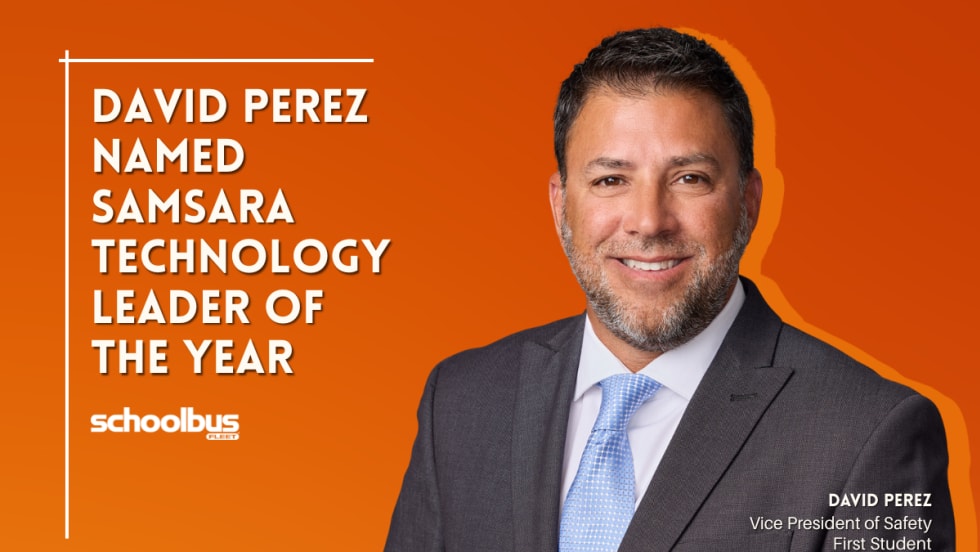
First Student Safety Executive Named Samsara Technology Leader of the Year
David Perez earned the honor for deploying AI-powered safety and fleet technologies that improved driver behavior and family communication.
Read More →
Zum Expands to Rhode Island with 2 New District Partnerships
The Ocean State becomes Zum’s 18th state served as the company expands its presence in the Northeast U.S., while launching operations in Philadelphia, and supporting FIFA World Cup 2026.
Read More →


Sponsored•June 22, 2026
The Driver Shortage Playbook
How student transportation fleets are hiring, retaining and adapting .
Read More →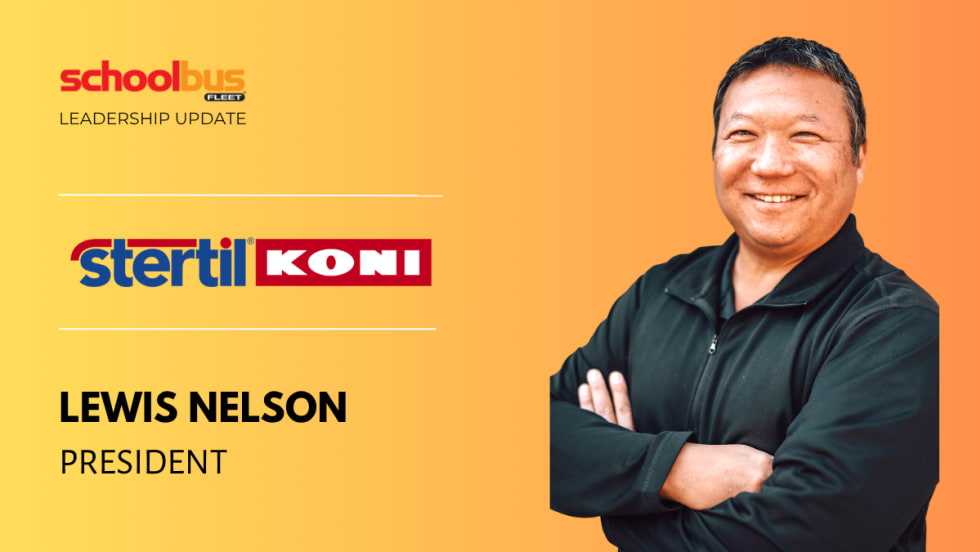
Stertil-Koni Announces New Company President
Lewis Nelson joins the heavy-duty vehicle lift provider, succeeding Scott Steinhardt in the lead role.
Read More →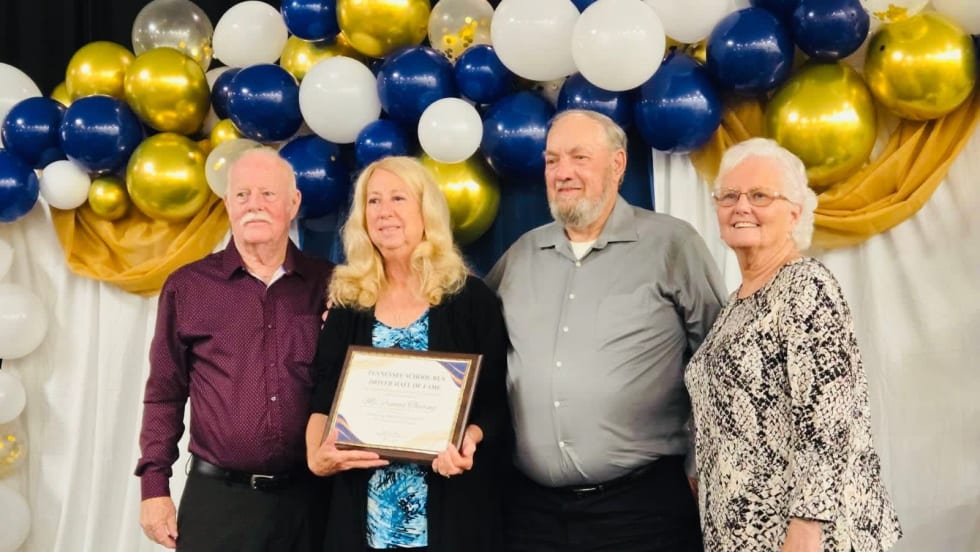
Tennessee Hall of Fame Honors Drivers for Decades of Service
Frances Theiring, a school bus driver for Wilson County Schools, retires this year after almost 50 years on the road. She is one of two long-time drivers honored for their service in the state.
Read More →
What Happens to a School Bus After Retirement? First Student Has a New Answer
Through a new partnership with Advanced Remarketing Services, proceeds from retired vehicle sales will support Special Olympics and other community-focused organizations while advancing sustainability goals.
Read More →
School Bus Logistics Adds 3 Data Analysts, Expands Routing Capabilities
Three new data analysts and a BusRight certification bring an added layer of support to the routing services districts already use.
Read More →
Sponsored•June 18, 2026
Outsourcing Student Transportation Services Toolkit
Did you know nearly 40% of school districts utilize a private contractor to serve their transportation needs? Explore why more school leaders are turning to contracted transportation services, and how outsourcing can create meaningful value without sacrificing control. Discover the practical benefits of a transportation services platform that provides flexibility with coordination.
Read More →
EverDriven Debuts TripCentral as New District Transportation Portal
The new transportation management hub takes over the district portal to power trip planning, operations, visibility, and intelligence for school district transportation needs.
Read More →