Stay up to date on all the important safety news or announcements this year with this guide to the headlines involving school bus safety! From product advancements to new regulations, here’s what you may have missed in 2024.
No initiative is more important than keeping children safe. Here are a few developments from the year.
Photo: SBF/Canva
5 min to read
Editors Note: This post was originally published on Oct. 21, 2024. It was updated on Dec. 18, 2025.
In honor of National School Bus Safety Week from Oct. 21-25 this year, we rounded up a list of what safety news, product advancements, new technologies, and stats have been unveiled so far this calendar year.
Ad Loading...
Speaking of, if you need some help encouraging your community members to do their part in keeping kids safe, download Verra Mobility's toolkit here.
As we speak, First Student’s “Safety Dog” is touring U.S. schools to teach children the importance of safety as well!
Safety Stats
It’s never fun to report on accidents and incidents involving the big yellow bus, but the more we know, the better we can do.
Analyzing 10 years of NHTSA crash data, we learned that about 100 people are killed each year in school bus-related accidents. And according to NASDPTS’ survey this summer, illegal passing has gone up about 4% year over year.
SBF conducted its own poll in February, showing that over 70% of behavior issues on the bus involve middle school students.
Ad Loading...
Eleven school zones in Florida participated in a speed study, which clocked nearly 10,000 speeding violations in just three days.
The state of Kansas released its annual loading & unloading survey, which found that six children suffered fatal injuries in school-year 2023-24.
Regulations & Legislation
Earlier this year, the NHTSA unveiled new proposed regulations and safety standards for electric vehicles, including school buses. FMVSS No. 305a focuses on post-crash safety measures related to electrical systems, enhances documentation requirements for manufacturers to address changing battery technologies and designs, and guides for first responders with vital information for safe handling during emergencies.
The same organization proposed changes to vehicle seating standards through FMVSS No. 207 to protect occupants during collisions. However, they later clarified that this would not apply to school buses.
After a fatal accident in 2023, an Ohio task force provided 17 recommendations aimed at preventing future events. State agencies and lawmakers are working together to implement what they can.
Ad Loading...
In the spring, a new DoJ rule was proposed to reclassify marijuana from Schedule I to II, affecting school bus driver drug testing. The NTSB officially spoke out, expressing their concerns over the proposal about how it would affect those in safety-related positions. The public comment period closed in July, and now the DEA plans to hold a hearing on Dec. 2, 2024. It’s unknown what steps may happen after that or when this would potentially go into effect.
In New York, Executive Order 39 required telematics on all city vehicles, including school buses. Since last reported, excessive speeding in city vehicles has been reduced by 70%.
The Federal Motor Carrier Safety Administration proposed a new CDL rule, which would allow applicants to take a skills test in another state, let permit holders operator a school bus without a CDL-holder passenger, remove the 14-day wait time for the skills test, and require third-party examiners be subject to training, certification, and record check standards.
Finally, late in October, Congressman Steve Cohen reintroduced the School Bus Safety Act. Originally proposed in 2018 and after multiple attempts, it's back. It's noted to implement safety recommendations from the National Transportation Safety Board, and would mandate installation of seat belts for every seat, stability control and automatic braking systems, and fire suppression systems. It would also create a grant program to help school districts modify their buses to implement the specifications.
On Oct. 21, Zum announced an enhancement to its safety features via new tech-enabled driver communication tools. With the communication system, operations staff can send important information to drivers – whether about a road closure, early dismissal, student updates, or anything else. Messages are received via the driver tablet and not sent while routes are in progress. Unlike radio communication, this enables all drivers to receive the same information at the same time. The feature is being implemented in Zum’s partner school districts nationwide.
This fall, Blue Bird will begin equipping all new buses with three-point seat belts. The OEM also plans to equip drivers with a steering wheel-deployed airbag, add LED lighting inside and outside the bus, rear and front cameras, lighted stop arms and signs, and strobe lights, and add collision mitigation systems.
Transportant and RWC Group are partnering to enhance safety by integrating the former’s system with the latter’s maintenance services.
Alternative transportation provider HopSkipDrive also announced several enhancements, including proactive ride intervention, location pins, enhanced rider information, greater timeliness, navigation alerts, and safety scorecards. It recently reduced turnaround time.
EverDriven also just released a new camera solution aimed at enhancing safety.
Ad Loading...
In July, Pro-Vision released the AlwaysSafe bus bundle, allowing school districts to choose how many video cameras they need to step up safety on the bus.
Safe Fleet (which was acquired in February) debuted a new AI technology called Stop Arm Violation Enforcement System (SAVES). This captures and processes stop-arm violations with an evidence package.
Camera adoption is on the rise, too, with more districts adding the safety tech to buses, such as BusPatrol’s newest order in New England. The company also recently hosted a teach-in in Virginia to teach safety practices.
Speaking of cameras, the NGO Together for Safer Roads, started the year with a new pilot in NYC, expanding its "Truck of the Future" program to include school buses. It brings new cameras and equipment to school buses to increase the field of vision and reduce blind spots.
Rewarding (and Funding)Safety
To recognize safe driving, NSTA put school bus drivers to the test in their annual School Bus Driver International Safety Competition in Austin, Texas. Nine people were celebrated for their skills in maneuvering either Type A, C, or D buses. Kansas held a similar event in June.
Ad Loading...
The FMCSA announced about $480 million in Motor Carrier Safety Assistance Program grant awards to fund initiatives that prevent crashes, fatalities, and injuries involving commercial motor vehicles.
NSTA also held its 2024 awards, honoring multiple individuals for their commitment to safety, among other things.
Although introduced in 2019, the NAPT’s “Zip. Zero. Nada. None.” campaign to encourage commitment to safer buses is ending soon, with a completion date of June 30, 2025. While (other) driver distraction is a serious issue, we hope that some day we can report that the number is quickly decreasing.
Did we miss something? Let us know what safety stories resonated with you this year in the comments!
The federal agency's report asks NHTSA to require all new school buses to be equipped with vehicle-integrated alcohol detection systems and passenger lap-shoulder belts.
Student transportation teams are being asked to do more with less, facing driver shortages, rising costs, and increasing safety expectations. This report uncovers how fleets are adapting, where technology is making the biggest impact, and why student ridership tracking is emerging as a top priority. Download the report to explore the key trends shaping 2026 and what they mean for your operation.
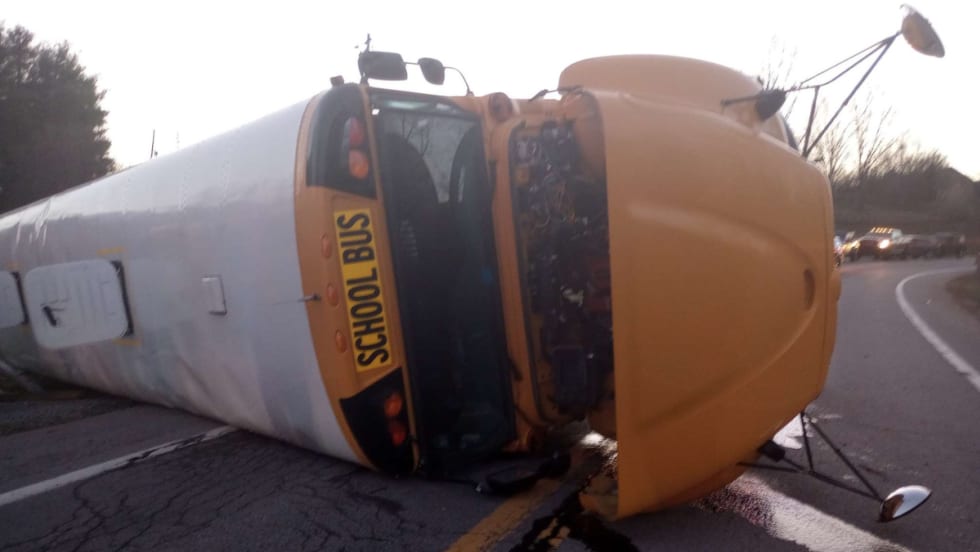
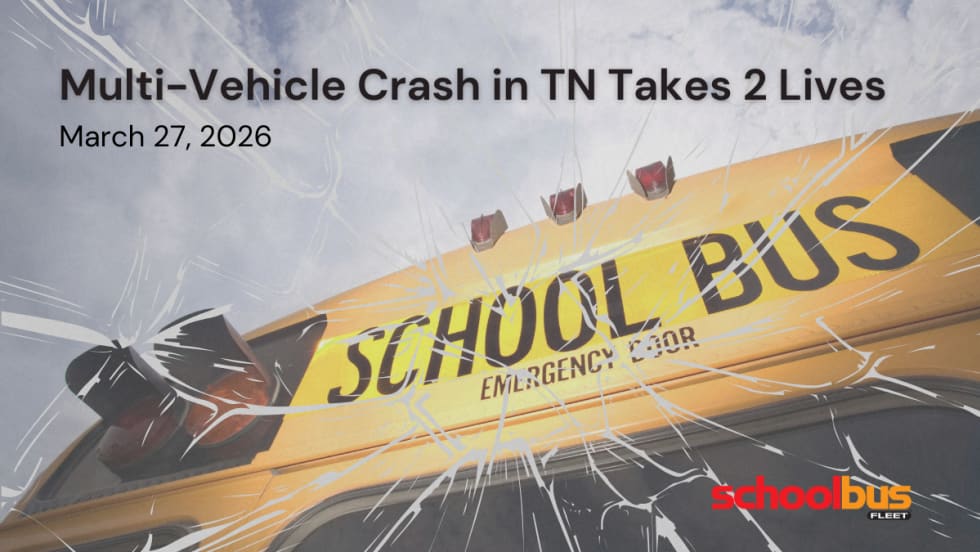
A Carroll County accident claimed the lives of two students and injured over a dozen others on a March 27 field trip for eighth graders at Clarksville-Montgomery County. A preliminary report adds new information to the story.
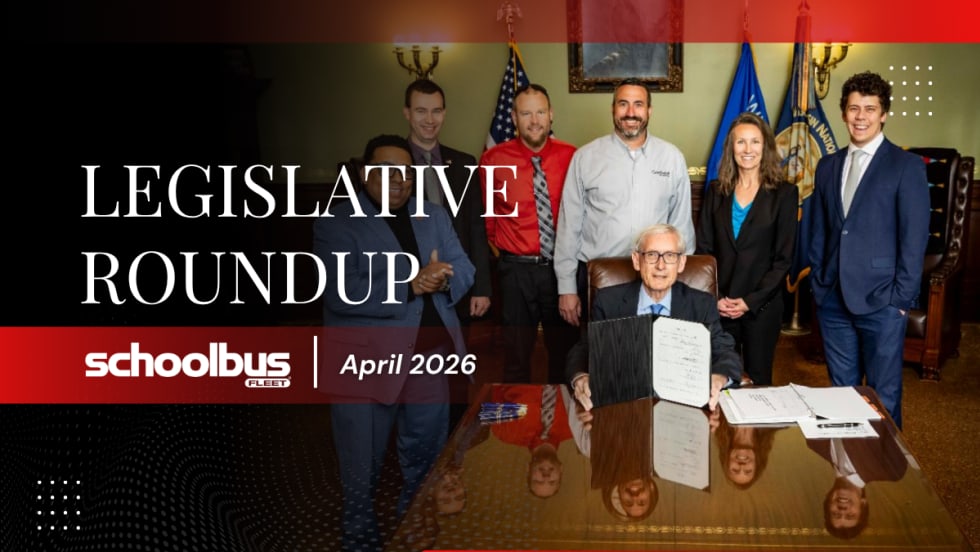
From driver shortage solutions in Tennessee and rural connectivity debates in Utah to new safety laws in Wisconsin and ongoing electric bus mandate discussions in New York and Connecticut, here’s the latest in school bus legislation across the U.S.
Waymo’s self-driving vehicles are under fire again after repeated school bus passing violations, raising questions about safety, remote operators, and regulation.
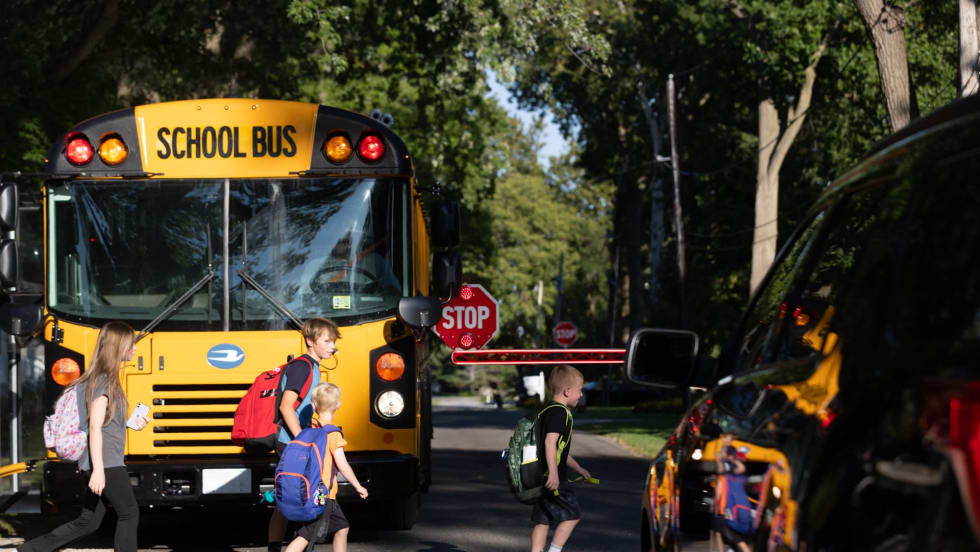
Distracted driving continues to pose serious risks in school zones, with new data and driver insights highlighting ongoing concerns and potential solutions to improve student and roadway safety.
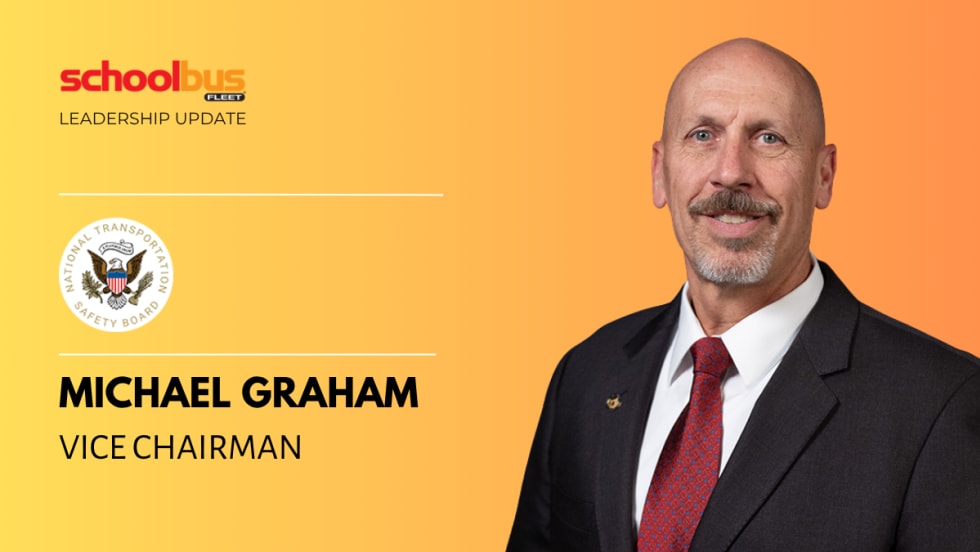
A former airline pilot has stepped into a new role at the independent federal agency, but where does he stand on issues like seat belts on school buses? Here’s what he’s said.
Two recent close calls at railroad crossings, a train clipping a bus and a rear-end crash, highlight why vigilance and training still matter. Here’s what happened and what to tell your own drivers.
The federal agency's proposed rulemaking would eliminate the requirement for school buses to come to a complete stop at railroad crossings if the warning device is not activated. The goal: to improve traffic flow and save costs. With new data released, public comment is open through April 27, 2026.
Stop reacting to engine lights and start predicting them. This guide reveals how transitioning from a "break-fix" model to a data-driven maintenance strategy can drastically reduce fleet downtime and protect your district's budget. Learn how to transform your garage operations from a cost center into a reliability powerhouse.