




20 Tips for Finding and Keeping Maintenance Techs
Strategies for fleets, small and large, to attract and retain talent to work on school buses.

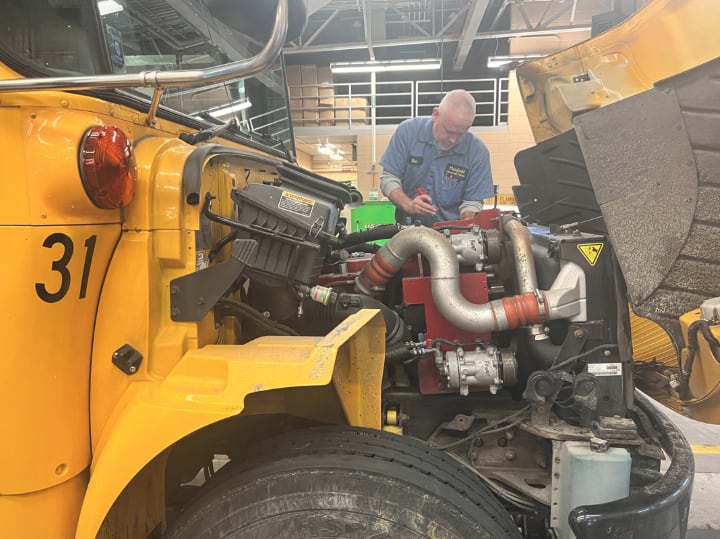
Ben Murphy, the only mechanic who maintains 52 school buses serving the Plainfield (Indiana) Community School Corporation, checks for power on harness for the fan clutch on Bus No. 31.
Photo courtesy Ben Murphy
The maintenance shop run by Carol Bowes is relatively small, serving a fleet of 85 school buses in rural Person County, North Carolina. She has three mechanics and one fuel person, an apprentice mechanic.
“But with a small shop, even one missing mechanic is a real stretch for the other mechanics,” Bowes says.
Her public school district has done a few things to help with hiring quality technicians.
“I went to HR with a spreadsheet showing what diesel mechanics made at a dealership compared with what we were paying,” she says. “It was almost embarrassing. We live in a rural area with no actual dealerships, but with the spreadsheet and factoring in where we were located, we were able to hire two excellent mechanics at a salary that was equitable. They also liked being able to work closer to home. It was a huge step in the right direction.”
They’ve also started a program to help pay for ASE certifications.
“This is a big boon for training young mechanics to become great diesel mechanics and thought it is in its beginning stages, I believe it has great promise,” she says. “We also enroll them in training that happens all through the year, both with vendors coming to teach us at state conferences and vendor conferences so they can learn all the new procedures and methods coming out. It is important that they stay current with training.”
It's also critical to make sure the technicians get the right tools, Bowes says.
“Technicians should have the ability to diagnose engine problems and have the correct tools to fix the problem,” she says. “They should not have to guess what a problem may be and then scrounge around trying to find or make the tools to get at the problem. That takes time and parts and money that could be saved if they just had the right equipment to begin with.”
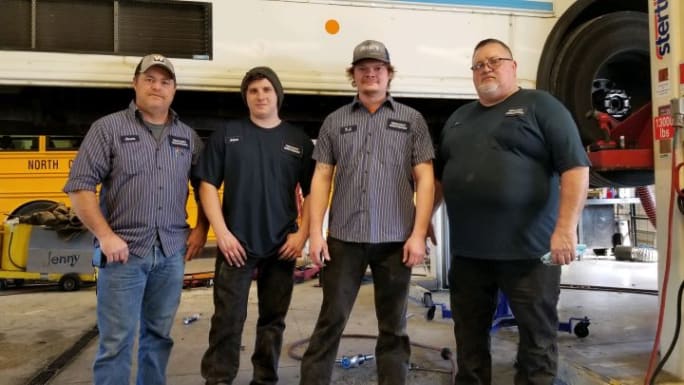
Mechanics working at Person County (N.C.) Schools include, from left to right: Jason Branscome, Adam Martin, T.J. Harris, and Phil Rowland.
Photo courtesy Carol Bowes
School Bus Fleet collected the following tips for recruitment and retention from Bowes, National Express, and Michael Stotler, the customer support manager for Thomas Built Buses:
Recruitment
Tip No. 1: Explore Tech Schools
Use tech schools and colleges with programs, as well as career fairs. Specialized schools often have programs with original equipment manufacturers (OEMs) that allow students to be trained on the latest software and procedures.
Tip No. 2: Seek Military Experience
Check out military career fairs that can connect you with people with vehicle work experience who are leaving the service.
Tip No. 3: Think Local
Be creative and don’t just post ads on websites. Place posts locally around your business in places frequented by technicians, including in the tool trucks that visit your business, local auto parts stores, and social media pages.
Tip No. 4: Hire from Within
Recruit through your current workforce and seek recommendations, with bonuses for employees who bring in recruits that stay beyond a certain period of time.
Tip No. 5: Build a Recruiting Pipeline
Engage potential candidates through recruiting sites, such as Indeed and LinkedIn, to create a quality pipeline.
Tip No. 6: Show the Benefits
Offer a full benefits package (medical, dental, vision). National Express includes prescription safety glasses every two years.
Tip No. 7: Share Cross Training
Provide training on multiple fuel types, including gasoline, diesel, propane, and electric buses.
Tip No. 8: Offer Certification Appeal
Offer incentive programs for ASE certification.
Tip No. 9: Pay Equitable Wages
Pay as much as possible, competitive with wages available at dealerships.
Tip No. 10: Give the Proper Tools
Ensure that your techs have the right tools and equipment to do their jobs and succeed.
Retention
Tip No. 1: Provide a Desirable Workplace
Be a preferred employer, with benefits beyond base pay.
Tip No. 2: Enable Ongoing Education
Offer continued training to elevate staff knowledge.
Tip No. 3: Fund New Tools and Upgrades
Grant a tool allowance for technicians.
Tip No. 4: Maintain Equipment
Keep shop tools and equipment in good working order, promoting a safe work environment.
Tip No. 5: Offer Software Subscriptions
Supply technicians with software and technology-based tools with current subscriptions.
Tip No. 6: Boost Spirits
Raise morale and have fun with free lunch day, monthly celebrations to celebrate employee birthdays, or ice cream on a hot day.
Tip No. 7: Unlock Advancement
Provide room to grow within the organization.
Tip No. 8: Build a Road Map
Give annual assessments to leverage strengths and promote development.
Tip No. 9: Spread the Word
Distribute informative monthly department newsletters.
Tip No. 10: Work Together
Collaborate via team email network to share best practices and troubleshoot with peers.
More Maintenance
The Essential Guide to School Bus Maintenance and Student Safety
Your district's buses carry students to school every day. This guide shows how predictive maintenance powered by fleet data helps keep buses reliable, drivers accountable and students safer from the first bell to the last stop.
Read More →
Kerry Brothers Grows Michigan School Bus Repair Network
The acquisition of Downriver Truck and Bus expands Kerry Brothers’ school bus maintenance footprint across southeast Michigan, adding repair capacity, diagnostic resources, and state inspection support.
Read More →
Noregon Introduces CAN Bus Diagnostic Tool, Expands JPRO Features
CAN Mentor and the latest JPRO update aim to simplify vehicle network diagnostics and improve repair efficiency for technicians of all experience levels.
Read More →
Cummins on Smarter, Simpler Engine Innovation
Cummins discusses its first-ever gasoline engine for school buses, EPA 2027, and why bus fleets still want durable, simpler internal combustion options.
Read More →
Report: 72% of Diesel School Buses Now Use Advanced Low-Emission Engines
New data shows advanced low-emission diesel technology continues expanding across school bus fleets, even as electric bus adoption gains momentum.
Read More →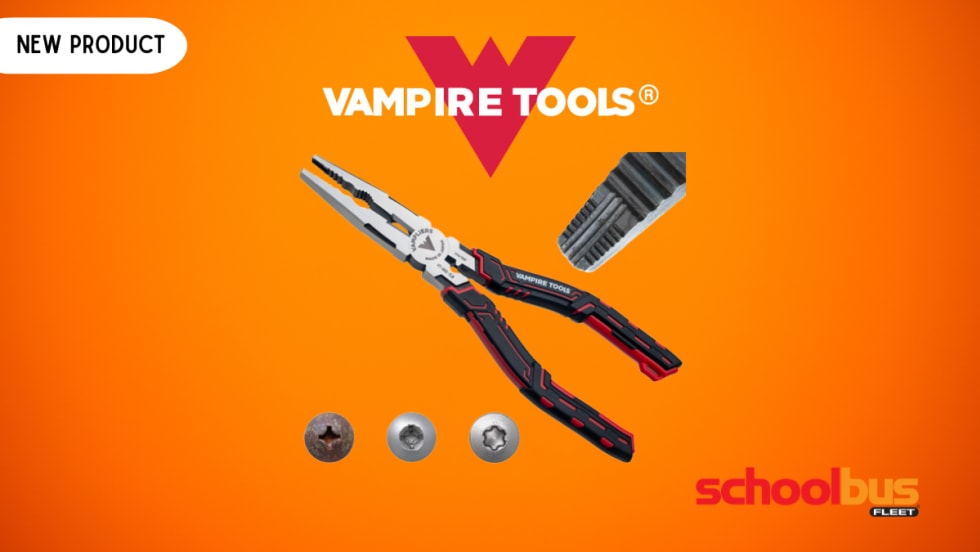
Vampire Tools' CAIMAN 7.5-Inch Multi-Purpose Screw Extractor Long-Nose Pliers with Crimper
Vampire Tools introduced the VAMPLIERS Caiman 7.5-inch multi-purpose pliers, combining screw extraction, cutting, crimping, and gripping functions into a single tool designed for fleet maintenance professionals.
Read More →
How Advanced Diagnostics Helps Bus Fleets Stay Ahead of Repairs
Chat with Noregon’s Kevin Smallhorn at ACT Expo about bus diagnostic tools, telematics integration, CNG maintenance support, and strategies to help reduce downtime and improve uptime.
Read More →
How School Bus Fleets are Getting Ahead of Breakdowns
Don’t let bus downtime wear you down. Here’s how bus operators are shifting from manual processes to AI-powered, data-driven maintenance systems for improved reliability and safety.
Read More →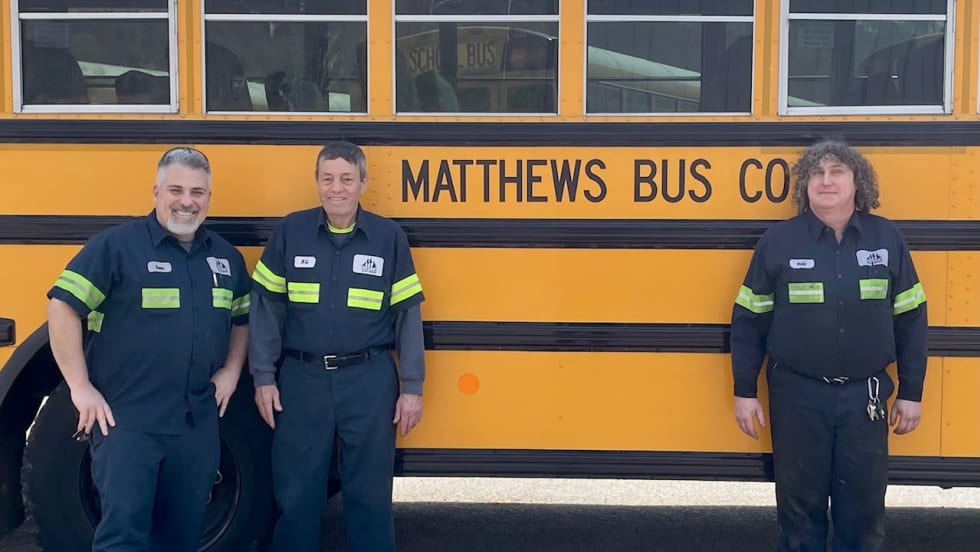
Pennsylvania School Bus Maintenance Team Praised for Dedication to Safety
Matthews Bus Company’s West Jefferson received a letter of commendation from the Pennsylvania State Police for their fleet inspections.
Read More →
From Chaos to Clarity: How School Districts Are Running Leaner Transportation Operations
Covering 38 routes on a Friday afternoon. Buses idling while routes overlap. Parents calling nonstop about late arrivals. Sound familiar? This whitepaper explores how district transportation leaders solved these exact problems — and what measurable results followed.
Read More →